207 E Gray St #10, Norman, OK, 73069
Bonded & Insured
Norman, OK

Siding Contractor in Norman, OK Built for Hail, Wind & Oklahoma Heat

Norman's siding takes a beating. Spring supercells drop hail anywhere from quarter to baseball size, storm lines push 60–80 mph straight-line winds, and July sun bakes west walls well past 100°F. Then winter swings to single digits and ice. Brittle vinyl cracks, 1990s hardboard swells and rots, and our red clay soils pull corners and trim apart. Norman Siding & Exteriors is a locally owned siding contractor that repairs, replaces, and installs siding made for these conditions. We fasten it to hold in high wind, flash it to keep wind-driven rain out, and pick materials that can handle hail.

We've spent more than 10 years working on central Oklahoma homes. That includes Craftsman bungalows in the Miller and Chautauqua historic districts, brick-and-vinyl tract homes in Brookhaven and Hallbrooke, rebuilt houses in Moore, and acreage properties out near Little Axe and Noble. We know which subdivisions have aging hardboard and which HOAs limit colors and materials. We also know how to document hail damage so your insurance claim holds up. And when the next storm comes through, we'll still be here.

  • Locally owned in Norman, OK
  • More than 10 years of siding experience
  • Bonded and insured
  • Free, no-pressure estimates
Free Estimate

Request Your Free Estimate

No obligation. Fast, honest quotes.

Prefer to talk? Call (405) 342-4466 — your details are never shared.

Credentials & Certifications BondedInsuredFinancing available
What We Do

Siding Services for Norman and Central Oklahoma Homes

Each job starts with figuring out what's actually wrong and which material will hold up on your house, not with a sales pitch. Here's what we do, how we do it, and where each service fits for homes around Norman.

Siding Repair

We fix hail-cracked panels, wind-blown courses, rotted boards, and failed seams. That includes sourcing matching profiles and colors and replacing damaged house wrap and flashing behind the siding.

We remove the damaged sections without disturbing good courses, inspect the sheathing, install correctly lapped wrap, and fasten new panels to the manufacturer's nailing specs. We photograph everything for your records and your insurer.

Spring storms often damage only one or two walls on homes in Moore, Norman, and Newcastle. A careful repair can stay under your wind/hail deductible or support a focused claim. Discontinued vinyl colors are common here, so we look for salvage options and close matches.

Best for: Homes with damage confined to a few panels or one wall, newer siding that's still sound overall, and homeowners who want to fix storm damage before rain gets in.

Explore
Siding Installation

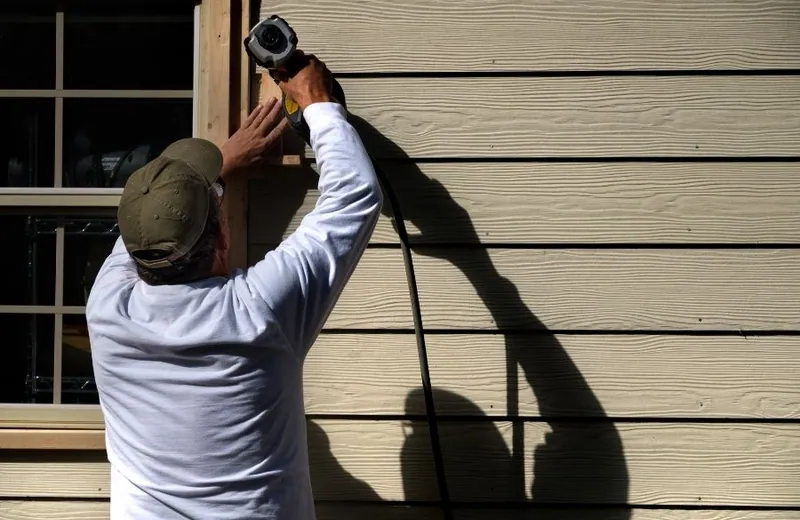
We install new siding on new construction, additions, garages, and outbuildings. We handle house wrap, flashing, trim, and soffit and fascia so the whole exterior works together.

Every installation starts with a properly flashed weather barrier. Then come starter strips, corner and window trim, and siding fastened for high-wind performance, with correct expansion gaps for Oklahoma's temperature swings.

In growing areas like Blanchard, Newcastle, and northwest Norman, we work with builders and owners who want better siding than the usual brick-front, vinyl-back package. We also side barndominiums and shops on acreage near Noble and Slaughterville.

Best for: New homes, additions, detached garages, and rural outbuildings where you're choosing the exterior from scratch.

Explore
★ Specialty

Siding Replacement

We do full tear-off and re-siding for homes with failing hardboard, brittle old vinyl, chalking aluminum, or storm damage too widespread to repair. We repair whatever we find underneath.

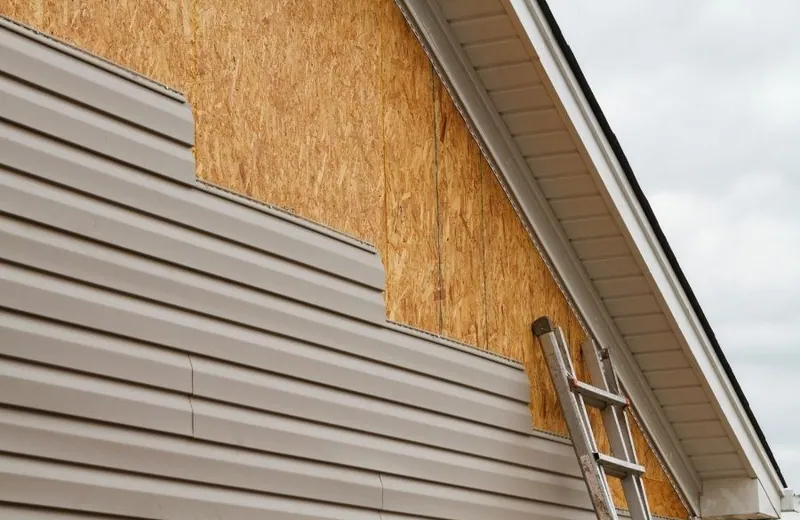
We strip the old siding down to the sheathing and replace rotted wood. Then we install new house wrap and flashing around windows, doors, and brick transitions before putting up the new siding and trim. Asbestos-cement and pre-1978 homes get the proper safe handling.

Norman has thousands of 1970s–90s homes with hardboard or OSB siding that's reaching the end of its life. Replacement is often the only lasting fix. It's also the usual result of large hail claims in Moore and west Norman.

Best for: Homes with widespread rot, siding older than about 25 years, failed hardboard or composite products, and storm damage across several walls.

Explore

Siding Inspection

We do a detailed assessment of your siding, trim, flashing, and the joints where siding meets brick. That includes post-storm hail and wind documentation you can share with your insurer.

We walk every elevation, probe suspect areas for soft spots, check moisture-prone spots like window sills and grade lines, and photograph damage with scale references. You get a clear written summary.

After a Norman hailstorm, a documented inspection helps you decide whether a claim makes sense against your percentage deductible. We also inspect homes for buyers and sellers, which is especially useful for 1980s–90s homes with hardboard.

Best for: Homeowners after a storm, buyers and sellers, landlords between leases, and anyone who suspects hidden rot behind painted siding.

Explore

Siding Maintenance

We do recurring upkeep to extend siding life, including resealing joints, refastening loose panels, gentle cleaning, treating mildew, and fixing small trim problems before they turn into rot.

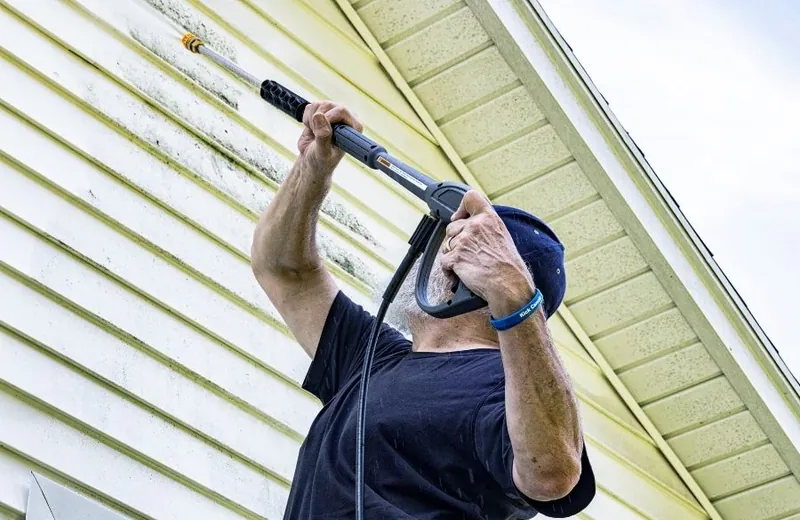
We do seasonal checks, ideally after spring storm season and before winter. We replace dried caulk with flexible sealants, check fasteners, clean without damaging high-pressure blasting, and touch up paint on fiber cement and wood.

Heat, UV, and shifting clay keep reopening brick-to-siding joints in Norman. Regular resealing keeps wind-driven rain out. Rental owners near campus often schedule maintenance between lease turnovers.

Best for: Landlords, owners of fiber cement or wood siding, and homeowners who want to get the most years out of the siding they have.

Explore

Vinyl Siding Installation

We install quality vinyl siding, from standard lap to thicker, insulated, and impact-resistant profiles, in colors chosen to resist fading in Oklahoma sun.

We hang panels loosely so they can expand, center nails in the slots, and use proper starter strips and lock engagement. That's how we keep vinyl from buckling in summer and tearing loose in wind.

Vinyl is still the go-to choice for budget-conscious families in Del City, Moore, and Noble. Choosing a thicker panel makes a real difference against Norman hail and the heat on west walls.

Best for: Homeowners who want low maintenance and good value, rental properties, and HOA neighborhoods that allow vinyl.

Explore

Fiber Cement Siding Installation

We install fiber cement lap, panel, and shingle siding. It resists rot, insects, fire, and heat warping, and it shrugs off small hail much better than vinyl.

Our crews cut with dust control, keep the required clearances above grade and roofing, flash every butt joint and penetration, and finish with factory or field paint suited to strong UV.

Fiber cement is the natural upgrade from rotting hardboard in 1980s–90s Norman homes. It also suits historic-district homes where a wood-like look matters, along with sun-blasted west walls across the metro.

Best for: Homeowners who want long-term durability, a painted wood look, better storm resistance, and higher resale value.

Explore
★ Specialty

James Hardie Siding Installation

We install James Hardie fiber cement products, including HardiePlank lap, HardiePanel, and HardieTrim, following the manufacturer's installation requirements so the warranty is protected.

We follow Hardie's guidelines for clearances, fastening, joint flashing, and trim. We use the right weather barrier and pre-finished colors where available, so the finish holds up to Oklahoma UV.

Hardie is a popular choice for Norman homeowners replacing storm-damaged or failing siding who don't want to do it again in ten years. It's common in Brookhaven, Hallbrooke, and Newcastle, and it often fits HOA material rules.

Best for: Homeowners who want a premium, recognized fiber cement brand with strong hail, heat, and moisture resistance.

Explore

Board and Batten Siding Installation

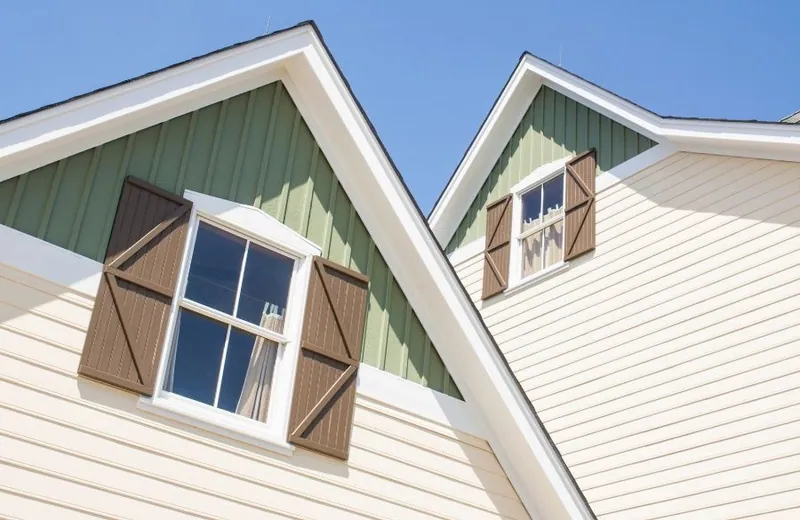
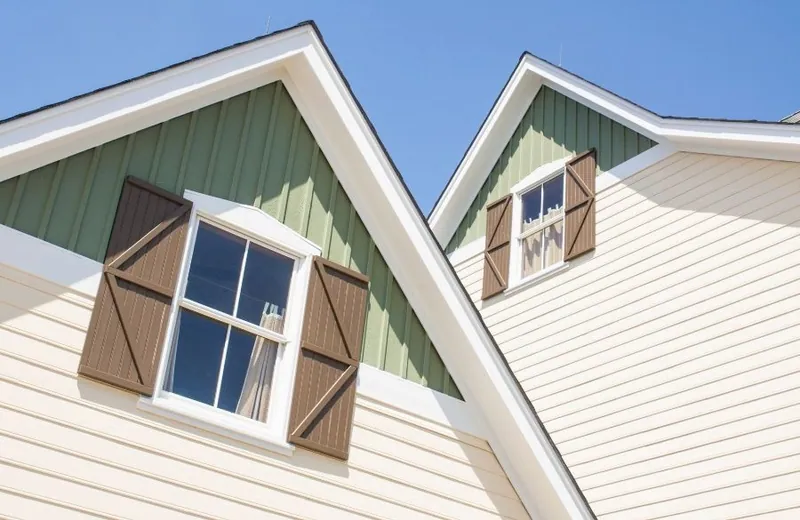
We install vertical board and batten siding in fiber cement, vinyl, wood, or metal, for full exteriors, gables, and accent walls on modern farmhouses and barndominiums.

We set the vertical boards over proper furring or blocking, space the battens evenly, and flash the horizontal transitions carefully. Vertical siding sheds water differently, so the detailing at windows and belly bands matters.

Board and batten is a popular look for new homes in Blanchard and Newcastle, barndominiums on acreage near Purcell and Slaughterville, and gable updates on brick ranches in west Norman.

Best for: Modern farmhouse styling, gable and accent updates, barndominiums, and rural custom homes.

Explore
Know The Signs

Common Siding Problems in Norman and the OKC Metro

Most siding failures we see around Norman come down to a few local causes: hail, wind, heat, moisture, and moving clay soil. Knowing the warning signs helps you deal with small problems before they turn into rotted sheathing or a denied insurance claim.

Hail-Cracked and Shattered Vinyl Serious

These are punctures, cracks, and broken-out sections in vinyl panels caused by hail. Even small breaks let wind-driven rain behind the siding. Damage often hides on the side of the house facing the storm, so homeowners don't see it until moisture problems start showing up.

Why it's common here

Norman's April–June storm season regularly brings hail from quarter to baseball size. Builder-grade vinyl on the sides and backs of 2000s tract homes is thin to start with. After ten summers of UV and a few single-digit cold snaps, it turns brittle and breaks instead of flexing. Storms tend to come from the west or southwest, so those walls take most of the hits. Insurance adjusters also look closely at percentage deductibles and whether replacement panels match, so thorough photo documentation right after the storm makes a real difference.

Signs you'll notice
  • Holes or spiderweb cracks in panels
  • Missing chunks along the bottom lock
  • Spatter marks on AC units and gutters
  • Dented downspouts and window wraps
  • Pieces of siding in the yard after a storm
  • Cracks clustered on west or south walls
Local patterns

We see this most in post-2000 subdivisions like Brookhaven, Hallbrooke, Cobblestone Creek, and Summit Valley, as well as south Moore and Newcastle, where brick fronts sit beside cheaper vinyl. Calls spike within days of every big spring supercell.

Our fix: We inspect and photograph every elevation, then replace damaged panels and match the profile and color. If matching isn't possible, we document why so your claim covers a consistent finish.

Wind-Blown and Unzipped Siding Emergency

This is siding that strong winds have pulled loose, buckled, or stripped off entirely. With courses missing, the house wrap and sheathing are open to rain right away. One loose panel can catch the wind and start tearing off the rest of a wall.

Why it's common here

Spring and summer storm lines push 60–80+ mph straight-line winds through Norman, and steady south winds of 15–25 mph keep working loose panels the rest of the year. Many homes were nailed too tight, too loose, or too far apart, or they're missing proper starter strip. Moore's 2014 wind code exists because of how violently storms hit this area. Old courses that were poorly fastened are the first to go.

Signs you'll notice
  • Panels flapping or rattling in wind
  • Gaps where courses have unlocked
  • Siding lying in the yard
  • Exposed house wrap or sheathing
  • Bent J-channel or corner posts
  • Loose soffit panels
Local patterns

This shows up on exposed lots on the west side, in open acreage around Noble, Blanchard, and Slaughterville, and on two-story gables anywhere in town. After a storm line, we often find whole gable faces stripped on newer homes in west Norman and Newcastle.

Our fix: We dry-in exposed walls quickly, then reinstall or replace siding with correct nailing and starter strips and fasten it to hold up in high winds.

Rotting Hardboard and OSB Composite Siding Serious

Masonite-type hardboard and 1990s OSB composite siding absorb water at cut edges, nail holes, and drip edges. Once that happens, they swell, flake, and rot. A fresh coat of paint can hide soft siding and damaged sheathing underneath for years.

Why it's common here

Norman grew quickly from the 1970s through the '90s, and builders used a lot of these products. Heavy spring and fall downpours, rain driven by south winds, and frequent freeze-thaw swings keep forcing moisture into the boards. Gutters that overflow during big storms soak the bottom courses and fascia. Many of these homes are now 30–45 years old, and the siding has reached the end of its life.

Signs you'll notice
  • Swollen, mushroomed board edges
  • Flaking or blistering paint near grade
  • Soft spots when pressed
  • Visible fibers or waffle pattern
  • Rot below windows and at butt joints
  • Woodpecker or insect damage
Local patterns

It's common in 1980s–90s neighborhoods across west and central Norman, including parts of Westwood and Trailwoods, along with similar subdivisions in Moore and OKC. Rental duplexes near campus often have patched hardboard hiding bigger problems.

Our fix: We remove the failing siding, repair any soft sheathing we find, install new house wrap and flashing, and re-side with fiber cement or quality vinyl.

Gaps at Corners, Trim, and Brick Joints Moderate

These are open seams at corner posts, J-channels, and the places where siding meets brick veneer. The siding often gets blamed, but the real cause is usually foundation movement. Either way, the gaps let in water, insects, and drafts.

Why it's common here

Norman's red clay is an expansive shrink-swell soil. It swells in wet springs and shrinks in drought summers, moving foundations seasonally and racking wall framing. Most homes in the area combine brick and siding, which creates long joints that depend on caulk. Summer heat dries that caulk out quickly. Combine moving framing with dried caulk and gaps keep reopening.

Signs you'll notice
  • Separated corner posts
  • Cracked caulk at brick-to-siding joints
  • Stair-step cracks in adjacent brick
  • Gaps widening seasonally
  • Daylight around trim
  • Sticking doors or windows nearby
Local patterns

We find this on brick-and-siding ranches in Hall Park, Eastwood, and Del City, and on three- and four-sided brick homes in newer west Norman subdivisions, where the joints between the two materials are long.

Our fix: We find the cause, reflash and reseal the transitions with flexible sealants, and reset the trim. If we spot signs of foundation movement, we'll tell you plainly so you can have it checked.

Heat-Warped and Faded Vinyl Minor

Vinyl panels that ripple, buckle, or sag from heat, or that fade unevenly from constant UV. Warping often starts where sunlight reflects off windows or dark roofing. It's mostly a cosmetic issue at first, but buckled panels can come unlocked.

Why it's common here

July and August highs in the upper 90s, many days above 100°F, and strong Oklahoma UV push bargain vinyl beyond what it can handle. South- and west-facing walls get the worst of it, and so do panels near reflective low-E glass. Darker colors soak up more heat and fade faster. Nailing panels too tight makes it worse, because the vinyl has no room to expand.

Signs you'll notice
  • Wavy or rippled panels
  • Melted spots near windows
  • Chalky surface residue
  • Uneven color between walls
  • Panels bowing outward
  • Courses pulling from locks
Local patterns

It's typical on west-facing walls in Summit Valley, Cobblestone Creek, and Newcastle tract homes, and on older vinyl covering 1950s Del City ranches. Homes next to neighbors with low-E windows facing them get warped panels in spots.

Our fix: We replace the warped sections with heat-tolerant panels and correct nailing, or recommend fiber cement for walls with severe sun exposure.

Rotted Fascia, Soffit, and Trim Moderate

This is decay in wood fascia boards, soffits, and window or door trim, usually caused by overflowing gutters or failed paint. Animals often take over the damaged spots, letting squirrels, birds, and wasps into the attic.

Why it's common here

Heavy Oklahoma downpours overwhelm gutters, especially ones clogged with leaves from Cross Timbers post oak and blackjack oak. Water spills back onto the fascia and soaks the wood. The October 2020 ice storm broke gutters and limbs all over town. Squirrels are everywhere in mature, tree-covered neighborhoods and chew through soft spots.

Signs you'll notice
  • Peeling paint on fascia
  • Sagging gutters
  • Holes or chew marks in soffit
  • Birds nesting in eaves
  • Dark staining behind gutters
  • Soft window sills or trim
Local patterns

This is especially common in older, tree-lined neighborhoods near Campus Corner and Downtown Norman, in Hall Park, and on wooded lots around Lake Thunderbird and Little Axe.

Our fix: We replace the rotted wood, add vented soffit and wrapped or fiber cement fascia and trim, and seal any animal entry points.

Mildew, Algae, and Chalking Minor

These are green or black growth on shaded walls and powdery, faded residue on aging aluminum and vinyl. Neither is a structural problem on its own, but both shorten paint life and can be early signs of trapped moisture.

Why it's common here

Spring humidity and oak shade keep north walls damp for long stretches. Aluminum siding from the 1960s and '70s chalks as its finish breaks down under years of Oklahoma UV.

Signs you'll notice
  • Green film on north walls
  • Black spotting near ground
  • Chalk on your hand after touching siding
  • Dull, uneven color
  • Staining under eaves
Local patterns

This shows up on shaded lots in Eastwood, wooded properties east of I-35, and aluminum-covered ranches in Del City and nearby parts of OKC.

Our fix: We do gentle cleaning, treat the growth, and check for moisture underneath. If the finish has failed, we'll recommend painting or re-siding.

Transparent Pricing

How Much Does Siding Cost in Norman, OK?

Siding costs around Norman depend on the material, wall area, what's hiding under the old siding, and access. These ranges reflect typical local projects. Your free estimate will give you an exact, itemized number for your home.

Typical Project

Storm repair on a newer brick-and-vinyl home

West Norman or Moore, replacing hail-damaged vinyl on one or two walls and gables with matched panels

$900 – $4,500
Typical Project

Gable and upper-wall re-siding on a brick home

Three- or four-sided brick home in Newcastle or Brookhaven, roughly 600–900 sq ft of vinyl or fiber cement plus soffit and fascia

$6,500 – $15,000
Typical Project

Full vinyl replacement on a 1970s–80s ranch

Roughly 1,600–2,000 sq ft of wall area, tear-off of hardboard, sheathing repairs, new wrap and trim

$14,000 – $26,000
Typical Project

James Hardie replacement on a two-story home

Roughly 2,200–2,800 sq ft of wall area, full tear-off, flashing, HardieTrim, factory-finished color

$30,000 – $52,000
Siding Material Primary Factor

Material choice makes the biggest difference in price. Standard vinyl is the most affordable option. Thicker, insulated, or impact-resistant vinyl costs more but stands up much better to Norman hail and heat. Fiber cement and James Hardie products typically cost noticeably more installed than vinyl because of the material, painting, and labor involved. In return, they resist rot, warping, and small hail far better. Wood, cedar, and metal each fall in their own ranges.

Square Footage and Brick Ratio Primary Factor

Siding is priced by the square (100 sq ft), so the actual wall area matters more than the home's living space. Many Norman, Moore, and Newcastle homes are three- or four-sided brick with siding only on gables and upper walls, which cuts cost significantly. A fully sided 1970s ranch or a two-story home needs far more material. Gables, dormers, and complex rooflines add cutting and labor time.

Hidden Sheathing and Rot Repair Major Factor

Homes from the 1980s and '90s with hardboard or OSB composite siding often hide soft sheathing behind paint that looks fine. You won't know the full scope until the old siding comes off. We price sheathing replacement per sheet in the proposal, so any extra work is predictable. Rotted fascia, sills, and trim near grade are also common here and add to the total.

Tear-Off, Hazardous Materials, and Permits Secondary Factor

Removing one or more old layers adds labor and disposal fees. Asbestos-cement shingles on older homes near campus and lead paint on pre-1978 homes call for special handling. Permit fees, HOA submittals, and Historic District Commission requirements, which sometimes mean replacing in kind with wood, can also affect the final cost.

Trim, Soffit, Fascia, and Accessories Secondary Factor

Upgrades like wrapped or fiber cement fascia, vented soffit, new window trim, house wrap, and insulated backer all add cost. They also add performance. Replacing animal-damaged soffits and rotted fascia during a siding project is usually cheaper than doing them as separate jobs later.

Financing is available for qualified homeowners, so you can tackle a full replacement now instead of patching failing siding through another storm season. New siding does more than improve curb appeal. It protects sheathing and framing from Oklahoma's wind-driven rain, cuts down on repeat storm repairs, and can raise resale value. Durable materials often pay off after the next hailstorm.

Local Expertise

Why Norman Homes Need a Siding Contractor Who Knows Oklahoma

Siding that would last 30 years in a mild climate can fail in under 15 here. Norman sits at the southern edge of Tornado Alley, on shifting clay soil, and gets four seasons that all push materials to their limits. Here's what your exterior is dealing with.

Hail, Wind, and Wild Temperature Swings

Central Oklahoma is one of the most hail-prone regions in the country, and severe weather peaks from April through June. Hail cracks and shatters vinyl, particularly older vinyl that sun and cold have made brittle. It dents aluminum and steel and chips the paint on fiber cement and wood. Straight-line winds of 60–80+ mph peel off loose courses, and steady 15–25 mph south winds work on weak fasteners most of the year. Summer highs sit in the upper 90s, often topping 100°F, which can warp vinyl on south and west walls. Winters bring lows in the 20s, Arctic outbreaks like February 2021, and ice storms like October 2020. Daily temperature changes of 40–50°F make siding expand and contract over and over. About 36–40 inches of rain falls each year, mostly in heavy bursts that get behind poor flashing.

A Housing Stock From Every Era

Neighborhoods near OU, such as Miller, Chautauqua, and Campus Corner, have 1910s–1940s bungalows and Tudors. Many still have original wood lap siding under later layers of asbestos-cement shingles, aluminum, or vinyl. Ranch homes from the 1960s and '70s in Hall Park, Eastwood, and older west Norman pair brick with T1-11 or hardboard gables. Homes built from the 1970s through the '90s often have Masonite-type hardboard or OSB composite siding, which swells and rots at drip edges and joints, and a lot of it is due for replacement now. Since 2000, subdivisions in west Norman, south Moore, Newcastle, and Blanchard have usually had brick fronts with cheaper vinyl on the sides and back. East of I-35, you'll find manufactured homes, barndominiums, and metal outbuildings.

Permits, Historic Districts, and Insurance Realities

Oklahoma uses the International Residential Code with state amendments. In Norman, permits and inspections go through Planning & Community Development, and large re-siding jobs or sheathing replacement can trigger review. Siding changes in the Miller, Chautauqua, and Southridge historic districts usually need a Certificate of Appropriateness from the Historic District Commission, which prefers repair or replacement in kind. Moore adopted a 135 mph wind standard in 2014 after the 2013 tornado, and that raised expectations for how well exteriors are fastened. HOAs in west Norman, Moore, and Newcastle often set colors and masonry ratios. Pre-1978 homes call for EPA lead-safe practices. Many policies also carry percentage-based wind/hail deductibles, so clear damage documentation matters.

A Weather-Savvy, Value-Conscious Community

About 128,000 people live in Norman, and the city is home to the National Weather Center and the Storm Prediction Center, so residents know their weather. Homeowners here tend to watch value closely and pay attention to their insurance. They've seen out-of-state storm chasers sign up contracts after a hailstorm and then disappear before warranty problems surface. Landlords near campus need durable siding they can schedule between lease turnovers. Military families in Del City need straight answers on tight budgets. Across the area, people want a contractor with a local reputation who will stand behind the work.

Norman Siding & Exteriors Siding Contractor in Norman, OK project in Norman, OK (1)
Norman, OK
Norman Siding & Exteriors Siding Contractor in Norman, OK project in Norman, OK (2)
siding
Talk to a Local Expert
The Norman Siding & Exteriors Difference

Why Norman Homeowners Choose Norman Siding & Exteriors

Locally Owned, and We'll Still Be Here After the Next Storm

Every big hailstorm brings out-of-state crews to Norman and Moore. They knock on doors, rush installs, and leave before warranty problems appear. We're a locally owned siding contractor who has served this area for more than 10 years. Our reputation comes from referrals among neighbors in Norman, Moore, Noble, and the rest of the metro. When you need a warranty repair or another inspection after a storm, you'll call a local number and talk to people who remember your house.

Bonded and Insured for Your Protection

Siding work involves ladders, tear-offs, and sometimes structural repairs, so protection matters. Norman Siding & Exteriors is bonded and insured. If something unexpected happens on your property, you aren't the one left holding the bill. We're glad to provide proof of coverage before any work starts, and we think every homeowner should ask any contractor for it. That's one of the simplest ways to sort a legitimate local company from a storm chaser working out of a pickup.

Experience With Every Siding Material and Era

We install vinyl, fiber cement, James Hardie, wood, cedar, metal, and board and batten siding. That means we recommend what fits your house, not whatever we happen to stock. We've worked on 1920s Craftsman homes near Campus Corner, 1970s ranches with hardboard gables, 2000s brick-and-vinyl tract homes, and metal barndominiums east of I-35. Each era has its own problems, like asbestos-cement shingles, rotting Masonite, or brittle early vinyl. We know how to handle every one of them correctly.

Honest Insurance Documentation, No Claim Pressure

Oklahoma's percentage wind/hail deductibles and disputes over matching panels make claims confusing. We inspect thoroughly, photograph damage on every wall, and give you a clear written summary to share with your adjuster. We'll tell you plainly when damage probably won't beat your deductible, and we'll never push you to sign over your claim at the door. You stay in control of your policy. Our job is to give you accurate information so you can make a good decision.

Built for Oklahoma Wind, Hail, and Heat

Installation quality decides whether siding survives an 80 mph storm line. We use proper starter strips, correct nail spacing and placement, and expansion gaps that let vinyl move through 40–50°F daily swings without buckling. We flash brick-to-siding transitions, windows, and butt joints so wind-driven rain stays out. When customers want better storm performance, we steer them toward thicker or impact-resistant vinyl and fiber cement.

Free Estimates and Transparent Pricing

Every project starts with a free estimate and an itemized written proposal. Hardboard and OSB siding often hide soft sheathing, so we explain up front how hidden repairs are priced. A surprise behind the wall won't turn into a surprise on your invoice. Financing is available for homeowners who'd rather spread out the cost of a full replacement. Whether you're a landlord or a Del City family on a budget, you'll know exactly what you're paying for.

Warranty-Covered Workmanship

We back our installations with warranty-covered workmanship. If something we installed isn't right, we come back and fix it. Combined with manufacturer product warranties, that gives you protection that lasts well beyond install day. A warranty only means something if the company is still around to honor it, though. Being local and staying around is the whole point of how we run our business.

Simple & Transparent

Our Siding Process, Start to Finish

No pressure, no surprises, no disappearing act. Here's how a typical project goes with us, from the first phone call to the final walkthrough and warranty paperwork.

Free Estimate and Inspection

Usually scheduled within a few days; faster for active storm damage
  • We inspect every wall, plus trim, soffit, and flashing
  • We probe for soft sheathing and hidden rot
  • We photograph hail and wind damage for your records
  • We talk through your goals, budget, and material options

Local note: In April–June storm season, we put homes that are open to the weather first and dry them in quickly.

Written Proposal and Insurance Support

Typically within a few days of the inspection
  • You get an itemized scope and price
  • We give you material and color options with pros and cons
  • We share documentation you can provide to your adjuster
  • We explain any allowance for hidden sheathing repairs

Local note: We'll talk honestly about percentage wind/hail deductibles and color-matching questions, and we'll never ask you to sign over your claim.

Permits, HOA, and Historic Approvals

From a few days to several weeks, depending on the jurisdiction
  • We confirm permit requirements with Norman, Moore, OKC, or other cities
  • We help prepare HOA material and color submittals
  • We support Certificate of Appropriateness applications in historic districts
  • We order materials and set a start date

Local note: The Miller, Chautauqua, and Southridge districts follow Historic District Commission guidelines. Unincorporated county areas often need less paperwork.

Installation

Most homes take a few days to two weeks
  • We protect landscaping, AC units, and windows
  • We tear off old siding and repair sheathing
  • We install house wrap, flashing, and trim
  • We hang siding fastened for high-wind performance

Local note: In summer, we start early to work around the heat. Pre-1978 homes get lead-safe work practices.

Final Walkthrough and Warranty

On the final day of the project
  • We walk the whole exterior with you
  • We sweep for nails and haul off debris
  • We review warranty coverage and care tips
  • We provide photos and paperwork for your files

Local note: After the next big storm, call us. We're local and we'll come back out.

Trusted Locally

A Local Siding Contractor Norman Can Count On

Years of Siding Experience
10+
Norman, OK

Our business is built on referrals from neighbors across Norman and the OKC metro. Homeowners recommend us because we explain things honestly, document storm damage carefully, and come back when they call.

20-Mile
Service Radius Around Norman
$0
Cost for Your Estimate
9
Communities Served
BondedInsuredFinancing available
Where We Work

Siding Service Areas Around Norman, OK

We serve homes within about 20 miles of Norman, from historic districts near campus to fast-growing suburbs and rural acreage. Each area has its own building styles and permit rules, and our crews know them.

Norman and Its Neighborhoods

Central Norman & Campus CornerEast NormanWest & Northwest NormanLittle Axe & Lake Thunderbird

North Toward the Metro

MooreOklahoma CityDel City

South, West, and Rural Communities

NobleSlaughtervilleNewcastleBlanchardPurcell

Not sure if we cover your area? Call (405) 342-4466.

Find Us

Serving Norman, OK & Nearby

207 E Gray St #10, Norman, OK, 73069 · Mon-Sun: 7:00 am – 7:00 pm

Central Norman & Campus CornerEast NormanWest & Northwest NormanLittle Axe & Lake ThunderbirdMooreOklahoma CityDel CityNobleSlaughtervilleNewcastleBlanchardPurcell
Questions & Answers

Siding FAQs for Norman Homeowners

How much does new siding cost for a house in Norman?

Most full replacements in Norman land between about $14,000 and $26,000 for vinyl on a typical single-story ranch. Fiber cement or James Hardie on a larger two-story home commonly runs $30,000 to $52,000. Homes with brick on three or four sides cost much less because only the gables and upper walls get siding. Storm repairs on a wall or two often run under $4,500. The biggest unknown is hidden sheathing rot behind old hardboard, so we price it per sheet in your proposal. Every estimate is free and itemized, and financing is available.

How long does a siding replacement take?

Most homes take a few days to two weeks once work starts. A gable-only project on a brick home might take two or three days. A full tear-off on a large two-story home with sheathing repairs takes longer. Before that, permits, HOA approval, or historic-district review can add anywhere from a few days to several weeks. In the April–June storm season, demand jumps across Norman and Moore, so scheduling early helps. In July and August, we start early in the morning to work around triple-digit heat.

Do I need a permit to replace siding in Norman?

It depends on the scope. The City of Norman's Planning & Community Development department handles residential permits. Large re-siding jobs, sheathing replacement, or structural changes can trigger permit and inspection requirements. A small repair usually doesn't. Homes in the Miller, Chautauqua, or Southridge historic districts generally need a Certificate of Appropriateness from the Historic District Commission before changing siding or materials. Moore, Oklahoma City, and Del City each run their own permitting, and unincorporated county areas often require less. We confirm the requirements before every job.

Should I file an insurance claim for hail damage to my siding?

Start with a documented inspection, then compare the estimated repair cost to your deductible. Many Oklahoma policies have separate wind/hail deductibles set as a percentage of dwelling coverage, often 1–2% or more. On a $300,000 policy, that could be $3,000 to $6,000 out of pocket. We photograph damage on every wall and give you a written summary for your adjuster. If matching discontinued vinyl is an issue, we document that too. We'll never ask you to sign over your claim. That decision stays with you.

Is fiber cement or vinyl better for Oklahoma hail and heat?

Fiber cement, including James Hardie, generally handles Norman's conditions better. It won't warp in 100°F heat, it resists rot from wind-driven rain, and it shrugs off small and moderate hail that would crack aging vinyl. Very large hail can still chip it, but the fix is usually paint and spot repairs. Vinyl costs less and needs almost no maintenance, and thicker or impact-resistant panels close much of the gap. For sun-blasted west walls or homes replacing failed hardboard, we usually recommend fiber cement. For tight budgets and rental properties, quality vinyl is often the smart choice.

How can I prevent siding damage between storms?

Small habits make a big difference. Keep gutters clear of oak leaves so overflowing water doesn't rot your fascia and lower courses. Trim limbs away from walls, because the 2020 ice storm showed how much damage falling branches can do. Reseal brick-to-siding joints every few years, since heat and shifting clay soil crack old caulk. Keep mulch and soil at least six inches below siding. Walk around your house after every major storm and look for cracks, loose panels, or spatter marks. An annual inspection catches problems early.

When should I repair siding versus replace it?

Repair makes sense when damage is limited to a few panels or one wall and the rest of the siding is sound. Replacement is usually the better value when you see rot or swelling on several walls, when hardboard or OSB siding is failing at the drip edges, when vinyl is brittle and cracks easily, or when hail damage covers most of the house. If matching panels are discontinued, replacing one full wall or the whole house may give a more consistent result. We'll give you an honest recommendation either way.

When should I call right away instead of waiting?

Call immediately if wind has torn siding off and left house wrap or sheathing exposed, if hail has punched holes in panels, or if you see water stains inside walls near windows. Oklahoma's spring storms often come in waves, and open walls can take on water within days. Soft spots, swelling boards, gaps at corners, and widening brick-to-siding joints aren't emergencies, but you should have them inspected soon. For insurance claims, it helps to document storm damage quickly, since policies often set reporting deadlines.

Get Your Free Siding Estimate in Norman Today

Whether hail just went through your neighborhood or your hardboard siding is finally giving out, talk to a local siding contractor who will give you straight answers and still be around after the next storm.

  • A free, thorough inspection of every wall, trim line, and flashing detail
  • Photo documentation you can share with your insurance adjuster
  • An itemized written proposal with no high-pressure sales tactics
  • Material recommendations suited to Oklahoma hail, wind, and heat
  • Help with permits, HOA submittals, and historic-district approvals
  • A bonded and insured crew with warranty-covered workmanship
  • Financing options for full replacements

Serving Norman, Moore, Oklahoma City, Noble, Newcastle, Blanchard, Del City, Purcell, Slaughterville, and homes within about 20 miles.

Storm tore siding off your home? Call us and we'll put priority on drying in exposed walls before the next round of rain.

Bonded • Insured

Call (405) 342-4466 Free Estimate